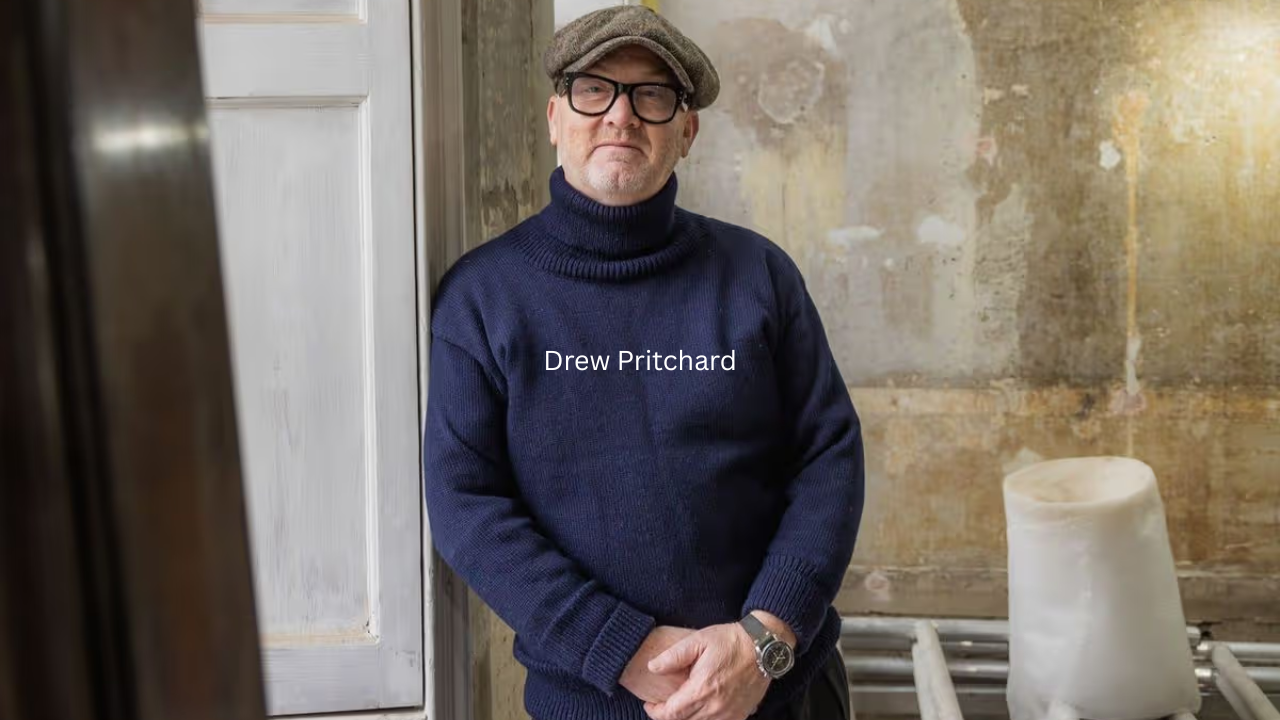
Drew Pritchard is a name synonymous with the world of architectural salvage and high-end antiques. For over a decade, he has dominated the television landscape as the charismatic lead of Salvage Hunters, but his influence extends far beyond the screen. As of 2026, Pritchard remains a titan of the trade, having recently navigated a monumental shift in both his business operations and personal residence. From his early days as a stained-glass restorer in North Wales to his current status as a Cotswolds-based dealer, his career is a masterclass in professional intuition, historical preservation, and the relentless “thrill of the find.”
The Early Years and Passion for Restoration
Born in 1970 in the medieval walled town of Conwy, North Wales, Drew Pritchard’s journey into the world of antiques was almost inevitable. Growing up in an area rich with history, he developed an early obsession with how things were made and the stories they carried. Unlike many who enter the trade through academic routes, Pritchard began his career at the grassroots level. He served as an apprentice stained-glass restorer and designer, a role that honed his technical eye for detail and gave him a deep appreciation for architectural integrity.
This foundation in restoration allowed him to see value where others saw ruin. In the late 1980s and early 1990s, he transitioned from a specialist restorer to an independent dealer. Starting with little more than a “ropy old Transit” van and a shed, he began scouring scrapyards and derelict buildings for forgotten treasures. This era of his life established the “man with a van” persona that fans would later fall in love with on television, a dealer who wasn’t afraid to get his hands dirty to find a masterpiece.
Key Skills That Defined Drew’s Early Career
To understand Drew’s success, one must look at the specific skills he mastered before finding fame:
- Architectural Knowledge: Understanding the structural importance of reclaimed materials like joists, flooring, and fireplaces.
- Stained Glass Expertise: A rare ability to identify, restore, and value ecclesiastical and residential glass.
- Negotiation Tactics: Developing the “gift of the gab” required to buy from private sellers and seasoned trade professionals alike.
- Visual Curation: The ability to see a piece of “junk” and visualize it cleaned, restored, and sitting in a high-end London showroom.
Salvage Hunters and Global Success
In 2011, Drew Pritchard’s life changed forever with the debut of Salvage Hunters on Quest. The show, which has run for over 20 seasons and hundreds of episodes, offered a refreshingly honest look at the antiques trade. Unlike more polished, studio-based programs, Salvage Hunters followed Drew across the UK and Europe as he negotiated with eccentric private collectors, navigated dusty warehouses, and visited grand country estates.
The success of the show turned Drew into a household name, but he always maintained that the program was an extension of his real business, not the other way around. His mantra, “this isn’t Bargain Hunt,” reflected his commitment to professional dealing. He wasn’t looking for quick flips; he was looking for quality, rarity, and design excellence. Over the years, he was joined by a rotating cast of experts, including his long-time friend Tee and his ex-wife Rebecca Pritchard, who played a crucial role in the business’s administrative and decorative success.

Drew Pritchard: Career Milestones at a Glance
| Milestone | Year | Description |
| Apprenticeship | 1986 | Started training as a stained-glass restorer in North Wales. |
| Business Launch | 1993 | Founded Drew Pritchard Antiques as an independent dealer. |
| TV Debut | 2011 | Salvage Hunters premiered on Quest/Discovery. |
| Book Release | 2023 | Published his memoir Man with a Van. |
| Tetbury Move | 2025 | Opened the flagship Drew Pritchard Antiques store in the Cotswolds. |
| Bath Restoration | 2026 | Completed the major restoration of his Grade I-listed Georgian home. |
The Big Move to the Cotswolds
A significant turning point in Drew’s career occurred between 2022 and 2025. After years of being based in his native North Wales, Drew made the strategic decision to close his famous Conwy high street shop and move south. This wasn’t just a business move; it was a total lifestyle transformation.
In late 2025, he officially opened his new flagship store, Drew Pritchard Antiques, in the historic town of Tetbury. Located in the heart of the Cotswolds, Tetbury is often referred to as the “antiques capital” of the region. By situating himself among the country’s top dealers, Drew signaled a shift toward even more curated, high-end acquisitions. The new store has been hailed as a major asset to the local economy, attracting international collectors and fans of the show alike to the South West.
Drew Pritchard Net Worth: Evaluating the Salvage Empire
As of 2026, Drew Pritchard’s net worth is estimated to be approximately £8 million to £10 million ($10 million to $13 million). While the majority of his wealth was built through his high-turnover salvage business and long-running television contracts, his recent financial journey has been a “high-stakes gamble.” To fund his £1.5 million Georgian townhouse restoration in Bath, Pritchard famously liquidated his private collection, which netted over £800,000 at auction. Despite telling fans he had “run out of money” during the peak of the renovations, his diversified assets including his new flagship Tetbury showroom, his successful online store, and his production royalties, ensure he remains one of the wealthiest and most successful figures in the British antiques industry.
The Bath Georgian House Restoration Project
While the opening of the Tetbury shop was a professional milestone, Drew’s most personal challenge has been the restoration of a five-storey Georgian townhouse in Bath, Somerset. Purchased in 2022 for £1.5 million, the Grade I-listed building was in a state of “mammoth” neglect, having been poorly converted into flats in the 1970s.
This project became the subject of intense public interest. The restoration was far from easy. Drew famously admitted to “gambling the lot” on the property, facing spiraling costs that exceeded £400,000 for renovations alone. To fund the project, he made the difficult decision to auction off his private collection of over 600 items pieces he had spent 30 years acquiring. The sale included everything from rare 18th-century furniture to his beloved vintage car collection. By early 2026, the restoration was completed, showcasing his signature blend of period-authentic materials and sophisticated styling.
Essential Elements of the “Pritchard Style”
If you are looking to replicate Drew’s aesthetic in your own home, consider these core pillars:
- Original Patina: Never over-polish or “over-restore.” The wear and tear of time is part of the item’s value.
- Scale and Proportion: Mixing massive industrial lighting with delicate, ornate furniture to create visual tension.
- Authentic Materials: A preference for heavy oak, cast iron, leather, and natural stone over modern synthetic alternatives.
- Storytelling: Every piece in a room should have a history or a reason for being there.
Drew Pritchard as an Author and Educator
Beyond the screen and the shop floor, Drew has sought to share his decades of knowledge with a wider audience. In his writings and interviews, he serves as both a mentor and a practical guide for aspiring enthusiasts.
In his advice to new collectors, Drew dispels many of the myths surrounding the trade. He emphasizes the importance of “reading, reading, reading” studying auction catalogs, visiting museums, and understanding the history of craftsmanship. He advocates for a “buy what you love” philosophy, suggesting that if a dealer is truly passionate about an item, they will always find the right buyer for it. His honesty about the risks, the failures, and the physical toll of the job has made him a respected figure within the global design community.
The Future of the Brand in 2026
As of 2026, Drew Pritchard continues to redefine what it means to be an antique dealer in the 21st century. While he has moved away from the grueling filming schedules of earlier years to focus on his Tetbury business and his home in Bath, his presence in the industry is as strong as ever. His online business continues to ship unique architectural salvage and interior pieces globally, and his digital presence remains a go-to source for design inspiration.
Drew’s legacy is one of preservation. Whether he is saving a 19th-century polychrome painted lantern or restoring the original floorplan of a Georgian mansion, he acts as a bridge between the past and the present. He has proven that “salvage” is not just about recycling old materials; it is about recognizing the inherent value in craftsmanship and ensuring that history has a place in the modern home.
Why Drew Pritchard Remains Influential
The enduring appeal of Drew Pritchard lies in his authenticity. In an era of mass-produced furniture and fleeting trends, his commitment to “the real thing” resonates with people looking for character and sustainability. His ability to mix different periods, placing a mid-18th-century Irish daybed alongside an industrial light fixture, has defined a specific look that many interior designers strive to emulate.
For fans and collectors, Drew represents the ultimate expert: someone who knows the value of a piece not just in monetary terms, but in its cultural and aesthetic significance. As he continues his work in the Cotswolds, the world of antiques remains a richer place for his contributions.
Also Read: The Rise of Adamfoss999: A Deep Dive into Digital Influence and Content Strategy





One thought on “Drew Pritchard: Antiques, Salvage, and His New Cotswolds Chapter”
Comments are closed.