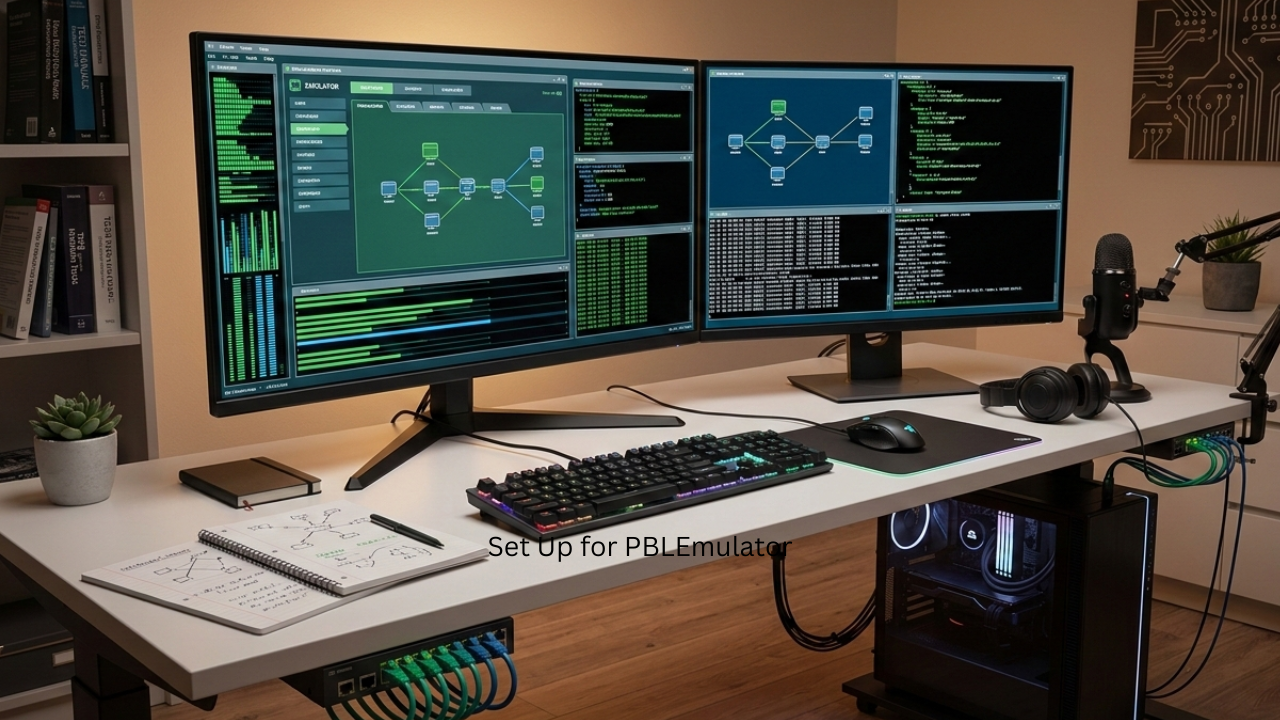
In the rapidly evolving world of software emulation, finding a stable and high-performance environment is the holy grail for enthusiasts. Whether you are looking to relive classic experiences or test specialised networking protocols, getting the right set up for PBLEmulator is the difference between a seamless experience and a frustrating technical hurdle.
This guide will explain the entire configuration process. We cover hardware, dependencies, and pro tips for uptime and efficiency.
Understanding the Core Requirements for PBLEmulator
Before starting the installation, it’s essential to know what the PBLEmulator requires to function optimally. Emulation is demanding; it makes your computer simulate entirely different hardware while running its own operating system.
For a lag-free PBLEmulator setup, aim for these minimum specs: Processor: Multi-core CPU, at least 3.0 GHz.
- Memory: Minimum 8GB RAM (Random Access Memory, which temporarily holds data for quick access), though 16GB is highly recommended for multitasking.
- Storage: SSD storage is essential for fast data access during emulation.
- Network: A stable Ethernet connection if you are utilising the emulator for network-based PBX or logic testing.
Meeting these hardware benchmarks eliminates common bottlenecks before installing the software.
Step-by-Step Set Up for PBLEmulator
Installing PBLEmulator is simple, but precise settings for environment variables and directory permissions are critical.
Preparing the Environment
Update your OS first. Many errors come from outdated C++ Redistributables or missing .NET Framework components. Download the latest package from the official source and perform a clean reboot.
Executing the Setup
Choose “Custom Installation” when running the installer. A dedicated partition for the emulator, on a separate drive from your OS, improves seek times and prevents system slowdowns.
Configuring Virtual Network Adapters
Configuring the networking layer in PBLEmulator is intricate. Since the emulator bridges virtual and physical hardware, network adapters require exact configuration.
You will likely need to create a “Bridge Adapter” within your network settings. This allows the PBLEmulator to have its own unique IP address on your local network, making it reachable by other devices as if it were a physical machine. Ensure that your firewall has specific “Inbound” and “Outbound” rules set for the ports used by the emulator. Typically, these are defined in the software’s documentation, but common ports include 5060 for SIP-related tasks or custom ports for proprietary protocols.
Optimising Performance and Resource Allocation
After launching the software, specify precisely how many computer resources it can use. Over-allocating resources may strain your host OS, while under-allocating causes the emulator to stutter.
CPU Core Mapping
Find “Processor Affinity” in settings. Leave at least two logical CPU cores for your system. If you have eight cores, allocate six to the emulator. This balance prevents system lockups under heavy load.
Memory Management
Set RAM allocation to “Static,” not “Dynamic.” Dynamic allocation may cause micro-stutters as RAM shifts between host and guest. Lock a specific amount (like 4096MB) for a stable emulator workspace.
Advanced Graphics and Rendering Tweaks
Most PBLEmulator operations are processing-heavy, not graphics-heavy, but interface rendering still affects system responsiveness.
In configuration, go to “Display” or “Rendering.” For a dedicated GPU, enable “Hardware Acceleration.” Switching between OpenGL and DirectX can resolve glitches. On Windows, DirectX 11 or 12 usually provides stable performance for emulation kernels.

Security and Firewall Integration
Security is often neglected in the rush to bring a system online. Yet, because an emulator creates a gateway into your network, it must be protected.
- Isolate the Emulator: If possible, run the emulator on a VLAN (Virtual Local Area Network, a segmented network within your physical one) to keep it separate from your personal data.
- Encryption: Enable any built-in encryption protocols (methods for securing data so it can only be read by authorised parties), such as TLS (Transport Layer Security, a cryptographic protocol for data transmission), for signal transmission within the emulator settings.
- Regular Backups: The PBLEmulator stores configuration data files weekly. If a setup fails, you can restore your PBLEmulator quickly.t plan, you might encounter the dreaded “Initialisation Failed” error. Here is how to handle the most common roadblocks:
Port Conflicts
If the emulator refuses to start its networking service, or if the networking service fails to start, another program (like Skype or Zoom) may use the same port. Use netstat -ano to find the process and reassign it. Administrator. Emulators often need to modify low-level system drivers or access protected memory spaces that standard user accounts cannot reach. Right-click the shortcut, go to Properties > Compatibility, and check “Run this program as an administrator.”
Maintaining Your PBLEmulator Environment
A professional setup isn’t a “set it and forget it” task. A professional setup requires ongoing maintenance to keep performance and reliability high. time. If left unchecked, these can grow to several gigabytes, slowing down file access. Enable “Log Rotation” in the settings to automatically delete or archive old logs.
- Kernel Updates: Check for updates to the emulation engine monthly. Developers frequently release patches that optimise CPU cycles and fix security vulnerabilities.
- Cache Clearing: Periodically clear the internal cache of the emulator to prevent “data rot,” which can lead to ghost bugs and strange behaviour in the virtual environment.
Final Thoughts on PBLEmulator Configuration
Achieving an advanced PBLEmulator setup requires a combination of robust hardware, meticulous software configuration, and diligent maintenance. By applying expert practices detailed in this guide, you move beyond basic installation toward enterprise-level emulation capabilities.
Be methodical, adjust one setting at a time, test the outcome, then move on. This careful process ensures that if something fails, you’ll know which setting caused the problem. With a stable setup, you’re ready to leverage the PBLEmulator’s capabilities for your project.
Also Read: Ftasiastock Market Trends from FintechAsia: The Ultimate 2026 Investment Guide








One thought on “How to Master the Perfect Set Up for PBLEmulator: The Ultimate Guide”
Comments are closed.